Dividend tax calculator
Work out the UK tax on dividends for 2026/27 or 2025/26 at the dividend tax rates for the year, with your salary, any other income, the Personal Allowance and the £500 dividend allowance, in England, Wales, Northern Ireland or Scotland. Then compare salary and dividend splits for a company director, corporation tax and National Insurance included.
It runs in your browser: nothing you type is sent anywhere or saved.
2026 to 2027 · England, Wales or Northern Ireland
of tax on your dividends.
Dividend tax by band
Keep the company books, dividends and director's loan account included, in IQ Books, free.
Try IQ Books freeSalary vs dividends calculator
How to pay yourself from your company
A dividends and salary calculator for a director who owns the company and takes the profit after corporation tax as a dividend. Enter the profit before your salary, and it compares the common director's salaries for 2026/27: employer and employee National Insurance, corporation tax with marginal relief, and your Income Tax on the salary and the dividend.
Rates
UK dividend tax rates, 2026/27
The dividend tax bands follow the Income Tax bands. Your dividends sit on top of your other income, so the band they land in decides the dividend tax rate for 2026/27.
| Band | Total income (standard Personal Allowance) | 2026/27 | 2025/26 |
|---|---|---|---|
| Personal Allowance | Up to £12,570Shrinks by £1 for every £2 over £100,000 | 0% | 0% |
| Dividend allowance | The first £500 of taxable dividendsStill uses up your band | 0% | 0% |
| Basic rate band (dividend ordinary rate) | £12,571 to £50,270 | 10.75% | 8.75% |
| Higher rate band (dividend upper rate) | £50,271 to £125,140 | 35.75% | 33.75% |
| Additional rate band | Over £125,140 | 39.35% | 39.35% |
The dividend tax increase announced in the November 2025 Budget took effect on 6 April 2026 and added 2 percentage points to the ordinary and upper rates; the additional rate and the £500 dividend allowance are unchanged. The same dividend tax rates apply in Scotland: only the bands for salary and other earnings differ there. The dividend allowance for 2025/26 was also £500, as was the dividend allowance for 2024/25, when the rates were 8.75%, 33.75% and 39.35%.
Every rate the calculators use, checked against gov.uk on 9 October 2026
Sources:
This is an estimate to help you plan, not tax advice. It does not include student loan or postgraduate loan repayments, pension contributions or salary sacrifice, Gift Aid, Marriage Allowance, savings interest, the High Income Child Benefit Charge, or reliefs that reduce adjusted net income, and it treats your total income as your adjusted net income. The salary vs dividends comparison assumes one director-shareholder who takes all the profit after corporation tax as a dividend in the same year, that the company has enough distributable reserves to pay it, that the accounting period sits inside the rates shown, and that the company receives no dividends of its own.
IQ Books by ReconcileIQ
The books behind the dividend
A dividend can only be paid out of profits the company has kept. IQ Books keeps those books, so the profit and the reserves are a report away before you declare one, and your accountant gets a ledger that already ties out.
01
Dividends and the director's loan account
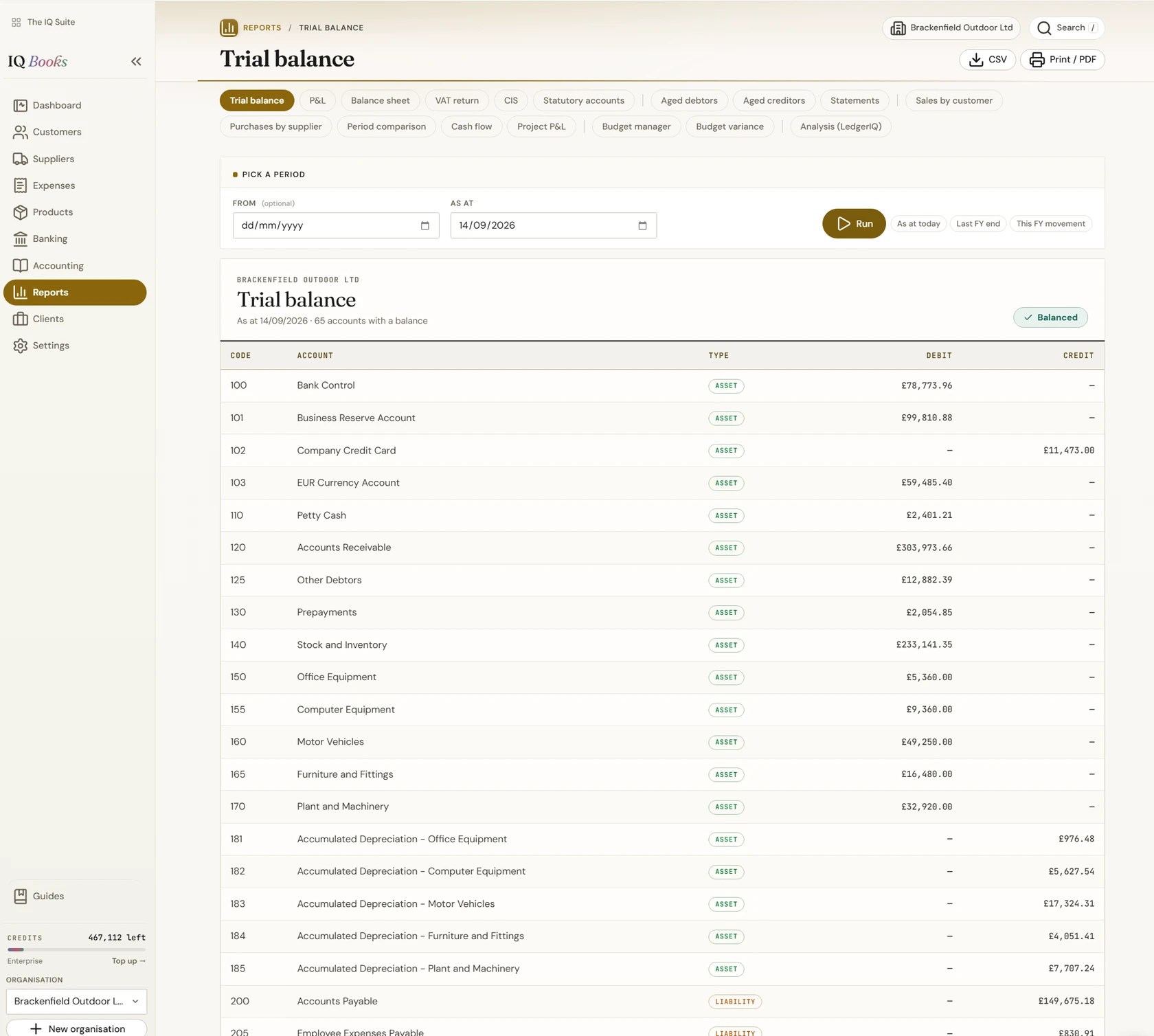
IQ Books keeps a limited company's books in one ledger: dividends, each director's loan account, the profit and loss and the balance sheet, live. At the year end the statutory accounts come from the same ledger, with no re-keying into a separate package.
- Dividends and director's loan accounts recorded as they happen
- Every director's loan account traced through the year for the statutory accounts note
- FRS 105 and FRS 102 Section 1A accounts from the ledger, tagged as iXBRL; Companies House filing on paid plans
02
Bank lines, coded on arrival
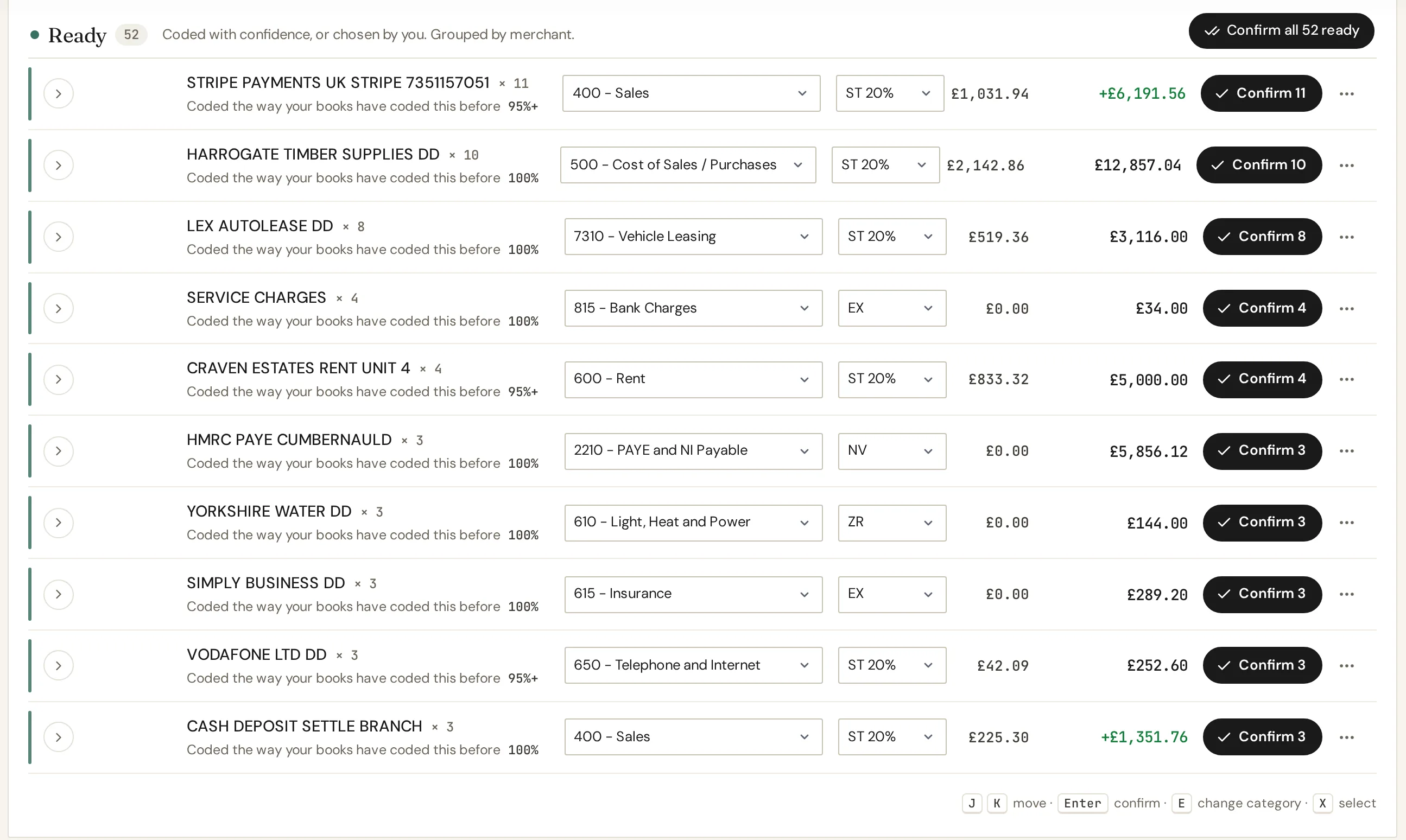
Connect your bank by open banking and new transactions arrive in IQ Books already coded by CodeIQ, the bookkeeping engine built in: the account, the VAT and the merchant, grouped so you confirm a whole batch in one click.
- Open banking feeds, or import a statement file
- Coded the way your books have coded that merchant before, with the confidence shown
- Coding by hand is always free; CodeIQ coding uses credits, with 1,000 free to start
03
For accountants: PrepIQ closes the year
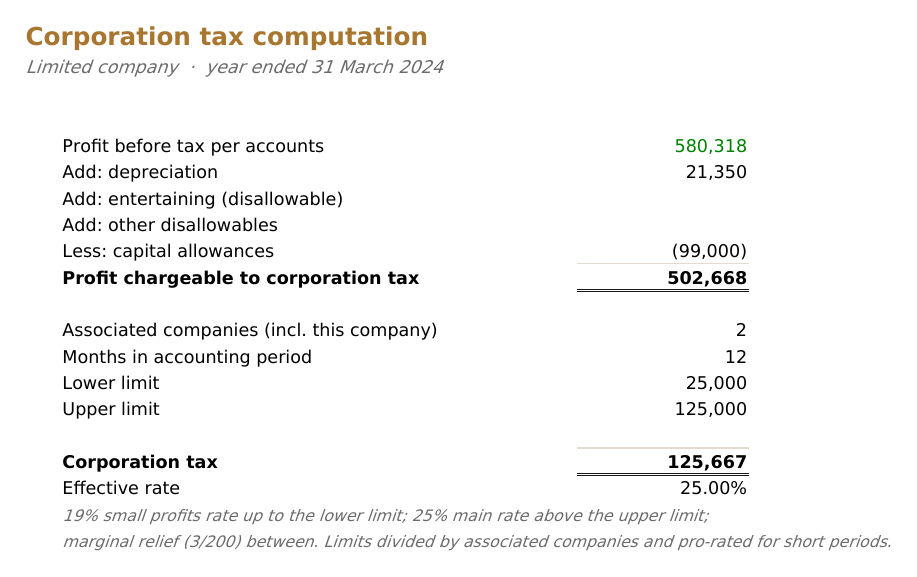
PrepIQ prepares a client's year-end working papers from their records: the extended trial balance, a dividends and director's loan account schedule, and the corporation tax computation at the banded rates with marginal relief, every figure cell-linked for your review. The adjustments post back into IQ Books.
- Corporation tax at 19% and 25% with marginal relief, associated companies and short periods
- Dividends and the director's loan account reconciled in the set
- Live on the practice plans, Practice Essential and above: see PrepIQ
The whole ledger, free
One organisation with the whole IQ Books ledger: bank accounts with open banking feeds, receipts, invoices and quotes, customers and suppliers, VAT returns and Making Tax Digital for Income Tax quarterly updates. Typing and coding by hand is always free; automation such as reading receipts and coding bank lines draws on 1,000 free credits.
More credits, more automation
Paid plans, from £5 a month, add monthly credits so the bookkeeping keeps doing itself, emailing invoices and automatic payment reminders from the app, CIS300 filing and Companies House filing. PrepIQ is on the practice plans.
Guide
Dividend tax, worked out
What dividend tax is, how the dividend allowance and the bands work, and how to calculate the tax on your dividends by hand.
What is dividend tax?
Dividend tax is the tax on UK dividend income: the Income Tax you pay on the share of a company's profit paid out to its shareholders, whether from a big listed company or your own limited company. It has its own rates, lower than the rates on salary because the company has already paid corporation tax on the profit, and its own allowance. There is no National Insurance on dividends.
The dividend allowance, and how much dividend is tax free
Two things keep dividends free of tax. First, any of your £12,570 Personal Allowance that a salary or other income has not used. Second, the £500 dividend allowance, a tax-free dividend allowance that taxes the first £500 of the dividends that are left at 0%. With no other income, £13,070 of dividends is tax free in 2026/27. The dividend allowance still takes up room in your bands, so it can tip the next pound of dividends into the higher rate.
Dividend tax bands
There are no separate dividend tax brackets or dividend income tax brackets: dividends use the Income Tax bands, added on top of your salary and other income. With the standard Personal Allowance, dividends that land in total income up to £50,270 are taxed at the dividend ordinary rate, those between £50,271 and £125,140 at the upper rate, and anything over £125,140 at the additional rate. Above £100,000 the Personal Allowance tapers away, £1 for every £2, so the bands start sooner.
How to calculate dividend tax
Calculating dividend tax by hand takes three steps: the Personal Allowance, the dividend allowance, then the bands. Take a director paid a salary of £12,570 and dividends of £30,000 in 2026/27. The salary uses the whole Personal Allowance, so all £30,000 of dividends is taxable. The first £500 falls in the dividend allowance at 0%. The other £29,500 sits inside the basic rate band, which has £37,700 of room, so it is taxed at 10.75%: £3,171.25. That is an effective rate of about 10.6% on the dividends. At the 2025/26 rate of 8.75% the same dividends cost £2,581.25, so the April 2026 increase adds £590.
Salary vs dividends for a company director
Limited company dividend tax is only half the picture for a director. A salary is a cost to the company, so it saves corporation tax, but above £5,000 it costs employer National Insurance at 15%, and above £12,570 it costs you employee National Insurance at 8%. A dividend saves no corporation tax but carries no National Insurance at all. That is why most owner-directors take a small salary and the rest as dividends. A salary of at least £6,708 in 2026/27 keeps the year counting for your State Pension, and between £6,708 and £12,570 no employee National Insurance is due. If the company has other employees it can usually claim the £10,500 Employment Allowance against its employer National Insurance; a company whose only employee paid over £5,000 is its sole director cannot.
How to pay dividend tax
If your dividends are more than your unused Personal Allowance and the dividend allowance, tax is due. Up to £10,000 of dividends, and if you do not file a tax return, tell HMRC by 5 October after the tax year ends, and they can collect the tax through your tax code. Over £10,000 you need to file a Self Assessment tax return; the return and any tax are due by 31 January.
Dividends and the director's loan account
A dividend has to be declared from profits the company has kept, after corporation tax. Money you take out that is not salary or a properly declared dividend goes to your director's loan account, and an overdrawn loan account at the year end has its own tax consequences for the company. Keeping the loan account straight through the year is the bookkeeping that keeps the dividend legitimate, and it is the schedule PrepIQ reconciles in a client's year-end set.
Rates and rules checked against gov.uk on 9 October 2026: GOV.UK: Tax on dividends; HMRC: Income Tax rates and allowances; HM Treasury and HMRC: Changes to tax rates for property, savings and dividend income; HMRC: Rates and thresholds for employers 2026 to 2027; HMRC: Corporation Tax rates and allowances.
Questions
Frequently asked
About dividend tax, salary vs dividends, and what IQ Books does with them.
What are the dividend tax rates for 2026/27?
The current dividend tax rates, from 6 April 2026, tax dividends above the £500 dividend allowance at 10.75% in the basic rate band (the dividend ordinary rate), 35.75% in the higher rate band (the upper rate) and 39.35% in the additional rate band. The dividend tax rates for 2025/26 were 8.75%, 33.75% and 39.35%. Which dividend tax rate applies depends on where your dividends land once they are added on top of your salary and other income.
How much dividend is tax free?
Dividends inside your unused Personal Allowance are tax free, and so is the first £500 above it, the dividend allowance. With no salary or other income that means £13,070 of dividends with no tax in 2026/27. If a salary already uses your £12,570 Personal Allowance, only the £500 dividend allowance is left, and above £100,000 of income the Personal Allowance shrinks by £1 for every £2.
What is the dividend allowance for 2026/27?
£500, the same as in 2025/26. It is not extra room on top of your bands: the first £500 of taxable dividends is taxed at 0%, but it still counts towards your basic and higher rate bands, so it can push other dividends into a higher band.
How much dividend tax will I pay?
Add your dividends to your salary and other income. Your Personal Allowance comes off the salary first, then the dividends. The first £500 of the dividends that are left is tax free, and the rest is taxed at 10.75%, 35.75% or 39.35% depending on the band it falls in. In GOV.UK's own example for 2026/27, wages of £29,570 and dividends of £3,000 mean £268.75 of tax on the dividends: nothing on £500 and 10.75% on £2,500.
How do I calculate tax on salary and dividends together?
Tax the salary first: the Personal Allowance, then 20% up to £50,270 of total income and 40% above that (Scotland has its own bands for salary). Then stack the dividends on top in the UK bands, take off the £500 dividend allowance and apply the dividend rates. Salary also carries National Insurance; dividends do not. The calculator does both, line by line.
Is it better to pay yourself a salary or dividends?
For most single-director companies a small salary plus dividends leaves more in your pocket than salary alone, because dividends carry no National Insurance. Salary is deducted before corporation tax and dividends are paid from what is left after it, so the best mix depends on the company's profit, your other income and whether the company can claim the Employment Allowance. The salary vs dividends calculator compares the common salaries side by side.
What is the best director's salary for 2026/27?
The usual candidates are £12,570 (the Personal Allowance and the employee National Insurance threshold), £6,708 (the lower earnings limit, which keeps your State Pension year) and £5,000 (where employer National Insurance starts at 15%). Without the Employment Allowance, £12,570 comes out ahead at most profit levels, because the salary and its employer National Insurance save corporation tax. Around the point where your income passes £100,000 and the Personal Allowance tapers, a lower salary can edge it, so check your own figures.
Did dividend tax go up in April 2026?
Yes. From 6 April 2026 the dividend ordinary rate rose from 8.75% to 10.75% and the upper rate from 33.75% to 35.75%, as announced in the November 2025 Budget. The additional rate stayed at 39.35% and the £500 dividend allowance did not change. On £10,000 of dividends taxed in the basic rate band that is £200 more a year.
Do I need to tell HMRC about my dividends?
Not if they are covered by your unused Personal Allowance and the dividend allowance. Above that, if your dividends are up to £10,000 and you do not file a tax return, tell HMRC by 5 October after the tax year ends, by asking them to change your tax code or through the helpline. Over £10,000 you need to file a Self Assessment tax return, registering by 5 October if you do not already file one.
Do Scottish taxpayers pay a different rate of dividend tax?
No. Scotland sets its own Income Tax bands for salary and other earnings, but the dividend tax rate in Scotland is the same as in the rest of the UK. Choose Scotland in the calculator and it applies the Scottish bands to your salary and the UK dividend rates and bands to your dividends.
Does IQ Books handle dividends and the director's loan account?
Yes. IQ Books keeps a limited company's books, including dividends and each director's loan account, which it traces through the year for the statutory accounts. It prepares FRS 105 and FRS 102 Section 1A accounts from the ledger and tags them as iXBRL for Companies House, with filing on the paid plans. For accountants, PrepIQ's year-end working papers include a dividends and director's loan account schedule and the corporation tax computation, and the adjustments post back into IQ Books.
Is this dividend tax calculator free?
Yes. This dividend income tax calculator runs in your browser: nothing you type is sent anywhere or saved. Every rate is checked against GOV.UK for 2026/27 and 2025/26. It is an estimate to help you plan, not tax advice.
Pay the dividend. Keep the books. Free.
IQ Books keeps your company's books, dividends and the director's loan account included, on the free plan, and the statutory accounts come from the same ledger. Companies House filing is on the paid plans.