Debtor days calculator with creditor and stock days
Enter a period’s sales and cost of sales and the balances at the end of it. You get debtor days, creditor days and stock days, the cash conversion cycle they add up to, and how much cash each day of credit ties up, with the formula behind every figure. It adjusts for the VAT inside trade debtors and creditors, takes an opening balance for the average, and works for a year, a quarter or a month.
Every sum runs in your browser. Nothing you type is sent to us or saved.
365-day period · VAT adjusted
debtor days: on average, a sale is paid about 46 days after it is invoiced.
From the ledger, every month: LedgerIQ works these ratios out from the general ledger with the trend, and IQ Books keeps the aged debtors and creditors live.
See LedgerIQ Try IQ Books freeMonth-end debtor days
The count-back method, month by month
Credit controllers often measure debtor days at a month end by counting back: take the debtors and work back through each month’s invoiced sales, most recent first, until the debtors are used up. It follows the sales pattern, so a busy last month does not flatter the figure the way an annual average can. Enter sales including VAT here, because the debtors include it.
Count-back at 30 September 2026
debtor days by the count-back method.
This calculator works from the figures you enter and is a guide to the arithmetic, not advice. Debtor and creditor days are averages: one slow customer or one large supplier can move them, so read them next to the aged debtors and creditors reports. It assumes a single standard VAT rate of 20% on the share of sales and purchases you set; if you also make reduced-rate sales, the adjustment is an approximation.
LedgerIQ and IQ Books by ReconcileIQ
The same ratios, every month, from the ledger
This calculator works from a few numbers you type in. LedgerIQ reads the whole general ledger, from IQ Books or an export from Xero, QuickBooks, Sage or any other platform, and works out debtor days, creditor days, stock days and the cash conversion cycle for every month, so you see the trend rather than one snapshot. IQ Books keeps the invoices, the payments and the aged debtors and creditors behind them current every day.
01
The cash cycle, from the general ledger
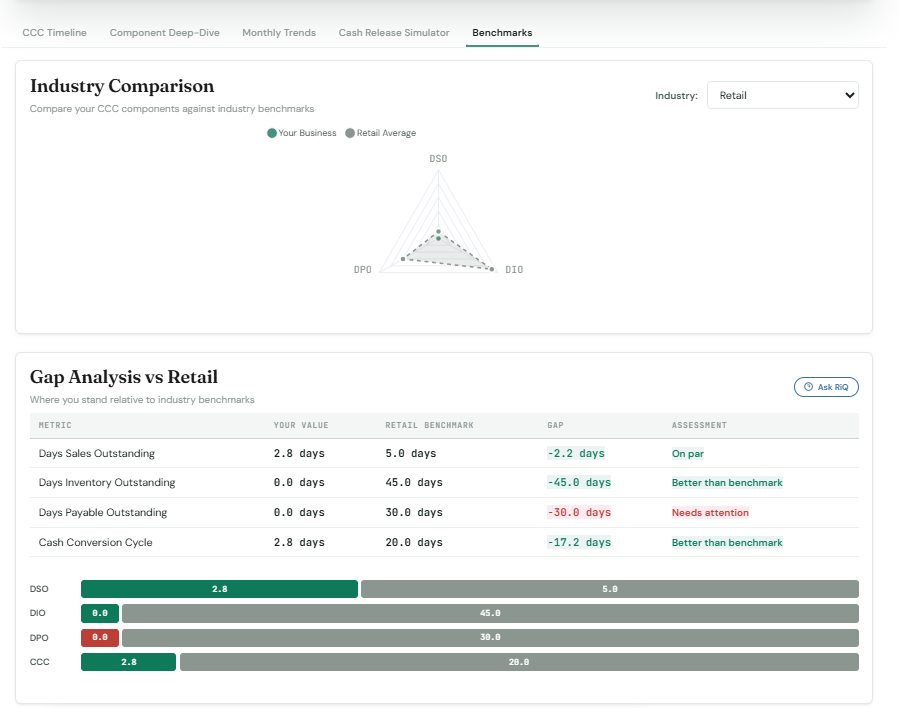
LedgerIQ’s working capital, receivables and payables, inventory and cash conversion cycle modules read the balances and the flows straight from the ledger, month by month. It shows days sales outstanding, days inventory outstanding and days payable outstanding together, how they have moved, and how much cash would come back from collecting sooner.
- Debtor, creditor and stock days for every month, with the trend
- The cash conversion cycle set against an industry comparison
- RiQ explains what moved and why, in plain English
A full LedgerIQ analysis is 1,000 credits, and every account starts with 1,000. See LedgerIQ.
02
The debtors, kept as you go
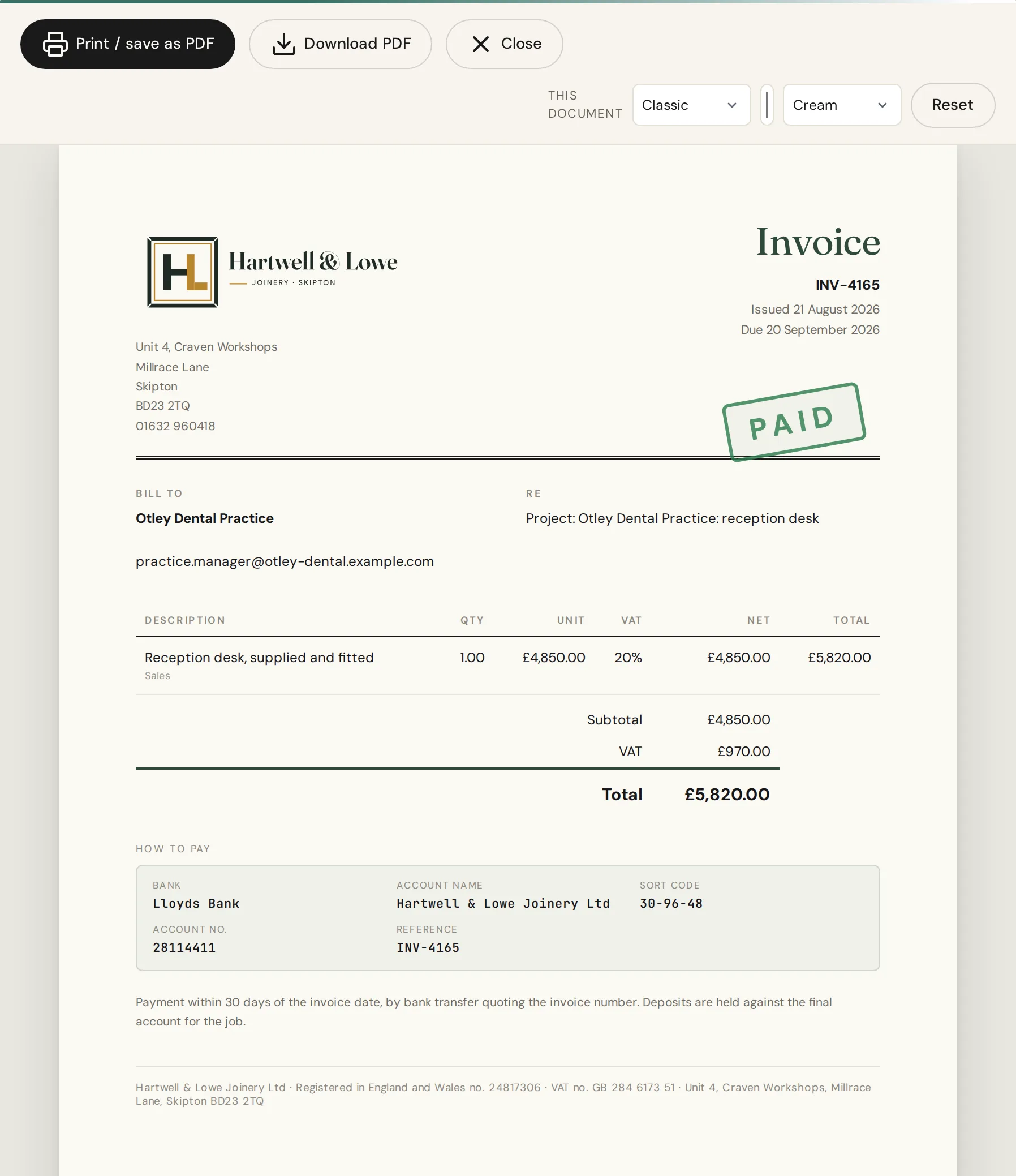
IQ Books is the accounting platform that does the bookkeeping for you. Invoices go out from it, payments arriving through the bank feed are matched to them, and the aged debtors and aged creditors reports are current every day rather than rebuilt at the month end. One organisation with the whole ledger is free.
- Invoices marked paid as the bank line matches them
- Aged debtors and aged creditors, live from the posted books
- Bank lines coded by CodeIQ, its AI bookkeeper
Coding by hand is always free; automatic coding draws on credits. See IQ Books.
Guide
Debtor days, worked out
The debtor days formula and how to calculate it, the VAT adjustment, the count-back method, creditor days and inventory days, and how they add up to the cash conversion cycle.
How to calculate debtor days
Debtor days, also called the debtor collection period or debtor turnover days (days sales outstanding, or DSO, in American usage), is the average number of days customers take to pay. The debtor days formula is:
Debtor days = trade debtors ÷ credit sales × 365
Worked through for a joinery firm with sales of £480,000 that is not VAT registered and is owed £64,000 at the year end: £64,000 ÷ £480,000 × 365 = 48.7 days. Use the number of days the sales cover, so a six-month period uses 182 or 183. Where the debtors moved a lot during the year, the average of the opening and closing balances gives a fairer figure: average debtors = (opening trade debtors + closing trade debtors) ÷ 2.
Should debtor days include VAT?
For a VAT-registered business, yes, it has to be allowed for. The trade debtors on the balance sheet include the VAT charged on each invoice, but turnover in the profit and loss account does not. Divide one by the other and debtor days come out too high: a fifth too high when every sale is standard-rated. The fix is to put both on the same footing, either by adding the VAT to the sales or by taking it out of the debtors; the answer is the same. With sales of £480,000 and debtors of £72,000 including VAT, the unadjusted figure is 54.8 days, and the adjusted one is £72,000 ÷ (£480,000 × 1.2) × 365 = 45.6 days. Zero-rated and exempt sales carry no VAT, so only the standard-rated share is grossed up. The same applies to creditors and purchases.
Calculating debtor days monthly: the count-back method
To measure debtor days at a month end, the count-back method works back through the months. Start with the debtors, including VAT. If they are more than the last month’s invoiced sales, count that month’s days in full and take its sales off; carry on to the month before; when the debtors left are less than a month’s sales, add that fraction of the month’s days. With debtors of £48,000 at 30 September and sales of £30,000 in September and £25,000 in August: September’s £30,000 covers its 30 days, leaving £18,000, which is 18,000 ÷ 25,000 = 0.72 of August’s 31 days, or 22.3 days. Debtor days are 52.3. The count-back calculator above does this for six months.
How to calculate creditor days
Creditor days, also called the creditor payment period or days payable outstanding (DPO), is the average time the business takes to pay its suppliers. The creditor days formula is:
Creditor days = trade creditors ÷ credit purchases × 365
Trade creditor days are best worked out on credit purchases, because cost of sales can include wages, depreciation and stock movements that never pass through trade creditors. When purchases are not to hand, cost of sales is the usual stand-in, and the calculator uses it unless you enter purchases. Allow for VAT in the same way as debtors. A creditor days figure well above the terms your suppliers set is a sign the business is stretching them, which can cost it goodwill and early settlement discounts.
Inventory days and stock days
Stock days, also called inventory days, days in inventory or days inventory outstanding (DIO), is how long stock sits before it is sold. The inventory days formula is:
Inventory days = stock ÷ cost of sales × 365
This is the days inventory outstanding formula. Stock is valued at cost, so it is divided by cost of sales, not by sales, and no VAT adjustment is needed. To calculate days of inventory for a single month, use that month’s cost of sales and its number of days. With stock of £36,000 and cost of sales of £300,000, inventory days are 43.8. Inventory turnover in days is the same figure another way: 365 divided by the inventory turnover ratio (cost of sales ÷ stock).
The cash conversion cycle and the working capital cycle
Add them together and you have the cash conversion cycle, which in the UK is usually called the working capital cycle: the number of days between paying for stock and being paid for what it became.
The cash conversion cycle equation, also written as the working capital cycle equation, is:
Cash conversion cycle = debtor days + inventory days − creditor days
For the joinery firm, VAT adjusted: 45.6 + 43.8 − 42.6 = 46.8 days. The operating cycle is the first two only, stock days plus debtor days, before suppliers’ credit is taken off. A negative cash conversion cycle means suppliers are paid after customers pay, so the suppliers are in effect funding the business, which is common in retail and online selling where customers pay at once. The cash tied up is the money behind those days: trade debtors plus stock less trade creditors.
What are good debtor days?
The best yardstick is your own payment terms. Under UK late payment rules, if no payment date is agreed a payment becomes late 30 days after the customer receives the invoice or the goods, and agreed terms between businesses usually have to be within 60 days. Debtor days much above the terms you set mean customers are paying late on average; the aged debtors report shows which ones. What is normal varies by sector, so the trend in your own figure, month on month, matters more than any single number. Each day off debtor days brings in a day’s sales in cash: on £576,000 of sales including VAT, about £1,578.
How to reduce debtor days
- Invoice the day the work is done, with the payment date and how to pay on the invoice.
- Agree terms in writing before you start, and keep them as short as the customer will accept.
- Chase on a schedule: a reminder before the due date, a call the day after.
- Make paying easy: card, bank transfer details on the invoice, or direct debit for repeat work.
- Read the aged debtors every week, not at the year end.
Checked on 9 October 2026: GOV.UK, Late commercial payments: when a payment is late. The formulas are the standard ones taught for UK accounts; this calculator is a guide to the arithmetic, not advice.
Questions
Debtor days, answered
About the formulas, VAT, what a good figure looks like, the count-back method, and what LedgerIQ does with them.
What are debtor days?
Debtor days are the average number of days a business takes to collect payment from its customers after invoicing them. They are also called the debtor collection period, debtor turnover days or days sales outstanding (DSO). Lower is better for cash: each day saved brings in a day’s sales.
How do you calculate debtor days?
Divide trade debtors by credit sales for the period and multiply by the number of days in it: trade debtors ÷ credit sales × 365 for a year. With debtors of £64,000 and sales of £480,000, that is 48.7 days. For a VAT-registered business, add the VAT to the sales first, because the debtors include it.
What is a good number of debtor days?
Compare it with your own payment terms. In the UK, a payment with no agreed date becomes late 30 days after the invoice, and terms between businesses usually have to be within 60 days, so debtor days well above your terms mean customers are paying late on average. What is normal varies by sector, so the trend in your own figure matters more than any single benchmark.
Should debtor days include VAT?
The VAT has to be allowed for. Trade debtors include the VAT on each invoice but turnover does not, so dividing one by the other overstates debtor days by a fifth when all sales are standard-rated. Gross up the standard-rated share of sales by 20%, or take the VAT out of the debtors; the result is the same.
How do you calculate debtor days monthly?
Most credit controllers use the count-back method. Start with the month-end debtors including VAT, then work back through each month’s invoiced sales, most recent first: count the whole month while the debtors cover its sales, take those sales off, and when what is left is less than a month’s sales, add that fraction of the month’s days. The count-back calculator on this page does it for six months.
What is the formula for average debtors?
Average debtors = (opening trade debtors + closing trade debtors) ÷ 2. Using the average in the debtor days formula gives a fairer figure when the balance moved a lot during the year. Enter both balances in the calculator and it uses the average.
How do you calculate creditor days?
Creditor days, or the creditor payment period, are trade creditors ÷ credit purchases × 365. If purchases are not available, cost of sales is the usual stand-in, though it can include costs such as wages that never sit in creditors. For a VAT-registered business, allow for the VAT in the creditors as you do for debtors.
What are inventory days?
Inventory days, also called stock days, days in inventory or days inventory outstanding (DIO), are how long stock is held before it is sold: stock ÷ cost of sales × 365. Stock is at cost, so it is compared with cost of sales rather than sales, and there is no VAT adjustment.
What is the cash conversion cycle?
The cash conversion cycle, often called the working capital cycle in the UK, is the number of days between paying for stock and being paid by customers: debtor days + inventory days − creditor days. The shorter it is, the less cash the business needs to fund its day-to-day trading.
What is the difference between the cash conversion cycle and the operating cycle?
The operating cycle is inventory days plus debtor days: the time from buying stock to collecting the cash for it. The cash conversion cycle then takes off creditor days, because suppliers’ credit means the business does not pay out the cash on day one.
What does a negative cash conversion cycle mean?
It means the business is paid by its customers before it pays its suppliers, so the suppliers are in effect financing its working capital. It is common where customers pay at once, such as retail and online selling, and is a strength for cash as long as suppliers are paid on the terms agreed.
Does LedgerIQ calculate debtor days?
Yes. LedgerIQ reads the general ledger, from IQ Books or an export from Xero, QuickBooks, Sage or any other platform, and works out debtor days, creditor days, stock days and the cash conversion cycle for every month, with the trend and an industry comparison. A full analysis is 1,000 credits.
Does this calculator store or send my figures?
No. Every sum runs in your browser. Nothing you type is sent to ReconcileIQ or anyone else, and nothing is saved when you close the page.
The ratios, every month, from the ledger.
LedgerIQ works out debtor, creditor and stock days and the cash cycle from the general ledger, with the trend and RiQ’s explanation. IQ Books keeps the invoices and aged debtors behind them current, and one organisation with the whole ledger is free.